Designing online learning for future teachers
Adapted and ran online sections of an educational-psychology course for future K-12 teachers, and tailored the video-analysis activities that replaced classroom visits when COVID-19 closed schools. 90% of students rated the teaching outstanding.
Context
At Indiana University I taught educational psychology to undergraduates preparing to become teachers, from 2017 to 2021. My main course was Educational Psychology for Teachers (P254). Its students were future teachers of art, music, world languages, and physical education, licensed to teach from kindergarten through high school. I also taught General Educational Psychology (P250) and a field-experience course (M201) that placed students in real classrooms.
The goal of P254 was practical: students should be able to use learning theory to understand, design, and assess learning in their own subject. I taught some sections in person and ran the online sections on my own.
What I did
Ran an online course built on activity, not lectures. The educational-psychology instructors shared a common course design, and the online version asked students to do the work of the course each week:
- Read the week’s articles and annotate them together on the web, so the discussion happened in the margins of the reading.
- Write a short weekly reflection on what they learned and how peers shaped it.
- Finish each unit with a workshop that applied the theory to their own subject. The workshops built into a portfolio across the semester.
- For the midterm, design lesson plans from different theories and explain how the plans differed.
Within that design I built new activities, adjusted the material for art, music, world-language, and PE classrooms, and picked journal readings about teaching in each student’s own field. The assessments were common across sections. I was one of the instructors who wrote them.
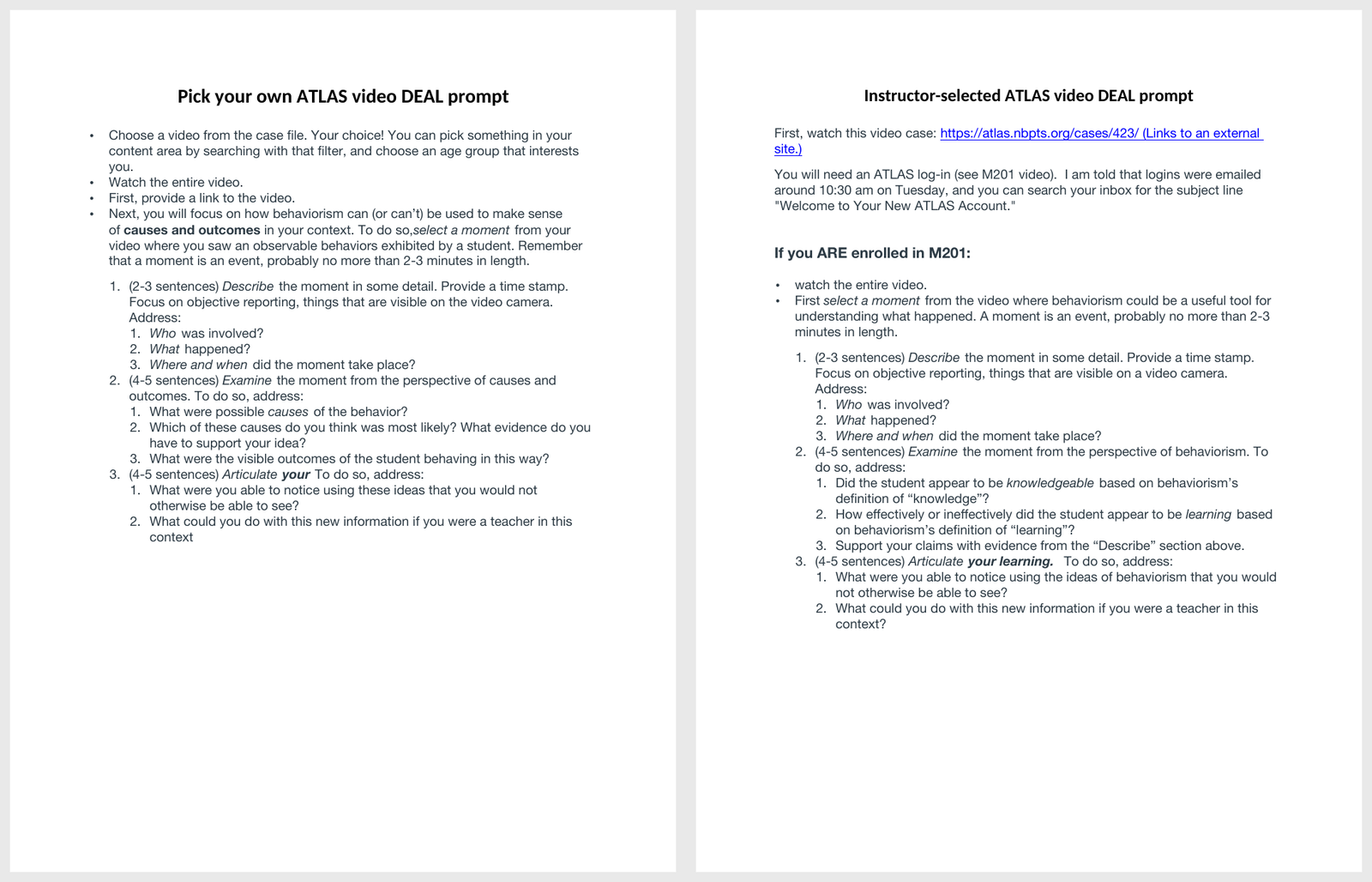
Tailored video analysis to replace classroom visits. When COVID-19 closed schools in 2020, students could no longer observe real classrooms. The instructors shared a video-analysis activity built on recorded classroom video from ATLAS, a library of teaching cases. Students picked a video in their own subject and grade level, chose a two-to-three-minute moment, and described it objectively. Then they examined the moment through one learning theory and said what they would do as the teacher. The structure followed the DEAL model: describe, examine, articulate learning. I edited the shared version for my section’s music, visual arts, and world-language students. The image at the top of this page shows two versions from my section: one where students pick their own video, and one built on a video I chose.
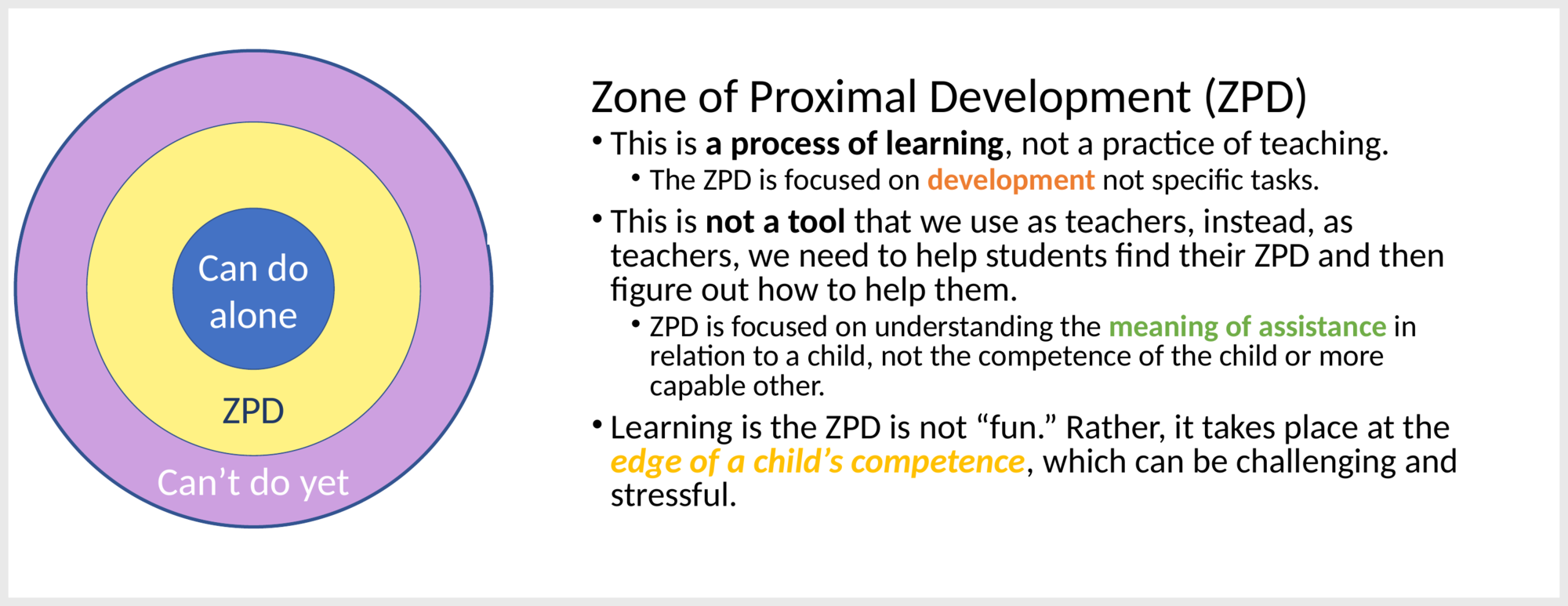
Recorded short lectures to support the activities. Each unit had a short recorded lecture that set up the theory students would then apply. The slides below are from the lecture on the zone of proximal development. They frame it as a question a teacher answers about each student, not as a technique to apply.
Taught culturally responsive pedagogy. I taught a unit on equity and culturally responsive pedagogy in both P254 and P250. A colleague designed most of the unit. I adapted it and built my own lecture for it, which moved from deficit-based to resource-based views of students.
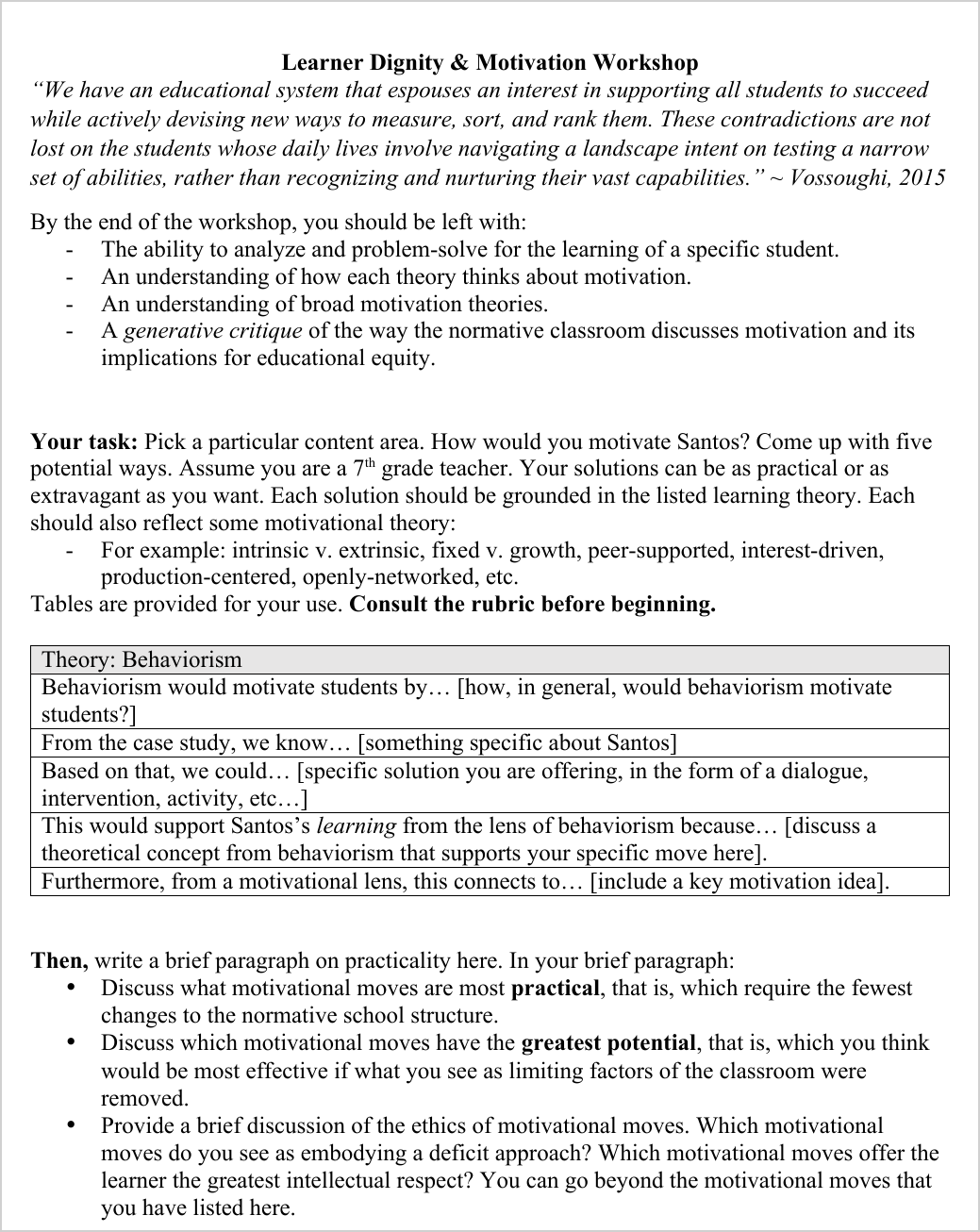
The unit’s core was a workshop, not a lecture. Students took one middle schooler’s case and proposed ways to motivate him through each learning theory. Then they judged their own ideas: which ones treated the student from a deficit, and which offered him the most intellectual respect. A colleague wrote the first version; I adapted it for my sections.
Supported other instructors. I designed course materials that other sections used, supported newer associate instructors, and served as an informal advisor on a full redesign of P250. The course lead made the final decisions.
Outcome
90% of students rated my teaching outstanding on course evaluations.